

For a product to be sold commercially, it must possess an inherent level of reliability. In a field as high stakes as medicine, this predictability is of the utmost importance. When cell and gene therapy manufacturers go through clinical trials to prove efficacy, regulatory approval is contingent on manufacturing consistency, defined by the FDA as the ability to ensure the “safety, identity, quality, purity, and strength (including potency) of the investigational product.”
Historically, establishing this quality control has been the main hurdle for advanced biological treatments, where living cells act as constantly moving targets that defy traditional chemical manufacturing templates. I gained firsthand experience with these dynamics during my time at LumaCyte, a biotechnology company specializing in advanced cellular analytics, where I found myself genuinely interested in a part of biology I hadn’t spent much time around before, even though I grew up around the industry through my parents’ work.
Reading papers, running experiments, and talking with scientists across the field is what sparked my interest. As I’ve kept learning, through both the internship and my classes, I’ve started to understand how much medicine is actually changing right now, and how different some of the newer therapies are from what most people picture when they think of treatment. These are not traditional drugs. In many cases, they are living cells engineered to carry out a specific job inside the body. Some reprogram immune cells to recognize and destroy cancer. Others restore proteins and hormones the body has stopped making, correct a genetic disorder at its source, or regenerate damaged tissue. Several have already produced outcomes that would have been impossible in the past.
Manufacturing, characterizing, and scaling living medicine reliably is still genuinely hard, and this shows clearly in the numbers. Only around 30 cell and gene therapies have received FDA approval since 2017, representing just 7% of all approved biologics, against a pipeline of nearly 3,000 cell and gene therapy trials currently in progress. That means, for most patients, a clinical trial isn’t a backup option, it’s the only way in, since so few therapies have made it to commercial approval at all. And even approval doesn’t guarantee reach: Hemgenix, a $3.5 million approved hemophilia B treatment, had only about a dozen patients treated by mid-2024, and sickle cell gene therapies Casgevy and Lyfgenia still had small, treated patient numbers as of early 2025. By comparison, at least 95% of people receive medicines through the standard commercial system, with under 5% of cancer patients ever enrolling in a clinical trial, the exact inverse of how cell and gene therapy patients are currently reached. Even when patients ask, and even when a therapy is approved, cost and manufacturing complexity keep the market slim and access rare.
As I kept studying chemistry and biology, I realized quickly the difference between what the science can do and what actually reaches patients. Working at LumaCyte prompted the same question. How do you reliably measure biology when it’s a living, moving target? Without a way to measure it accurately, consistently, and with predictability, these therapies can’t scale and will stay out of reach for most people who need them.
Clinical Proof and the System Paradox
Victoria Gray had lived with sickle cell disease since birth, a single mutation in the beta globin gene that affected how her blood carried oxygen, causing chronic pain and repeated hospitalizations, with organ damage building up over decades. There wasn’t a cure.
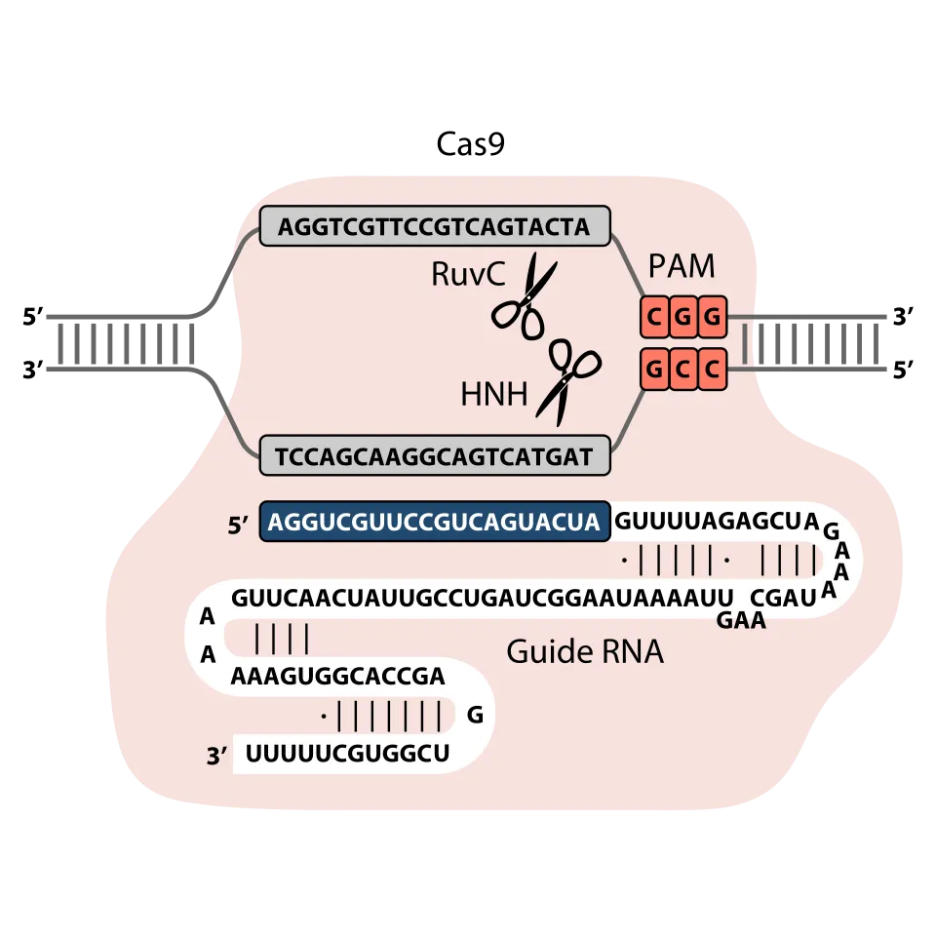
In 2019, doctors removed her stem cells, used CRISPR-Cas9 to correct the mutation and restore a working hemoglobin pathway, and reinfused them after a conditioning treatment. Her body started producing healthy red blood cells, and the pain and hospitalizations that had defined her life for years finally stopped. A condition she had been born with was corrected through a single genetic intervention.
A similar case occurred in oncology. Chris White was diagnosed with Stage IV mucosal melanoma, one of the more aggressive cancers there is. Over eighteen months, he went through surgeries, chemotherapy, and immunotherapy while the disease kept progressing. He was referred to a Tumor Infiltrating Lymphocyte Therapy trial, but brain metastases showed up before treatment started and he was removed from the study. He was told to prepare for hospice.
Then, through a narrow set of circumstances, he got back into the trial. Doctors extracted his own immune cells, grew them outside his body, and selected the ones able to recognize his tumor. After treatment to reset his immune system, they reinfused those cells. The cells expanded, found the cancer, and eliminated it. Within a year, there was no evidence of the disease left. He is still in remission 6 years later.

We’re living in a stretch of time where a disease someone was born with, and a cancer with almost no options left, can both be reversed using the patient’s own cells. Both Victoria and Chris were treated at close to the worst possible point for a therapy to still work, decades of accumulated damage in her case, nearly every other option exhausted in his, and the therapies worked anyway.
The paradox is that some of the most effective treatments that exist are usually only offered once a patient has run out of other options, a pattern borne out by data on CAR T-cell therapy in acute lymphoblastic leukemia, where remission rates near 80–85% have been achieved in patients who had already exhausted standard treatment, and by long-term follow-up data on CD19 CAR T therapy, where survival benefits were most pronounced in patients treated before their disease burden became severe. Similar patterns hold in CAR T-cell therapy for non-Hodgkin lymphoma, where reserving these therapies for refractory, late-stage disease is still the norm. The industry still cannot reliably predict when and how well they will work in an earlier patient, which is what keeps them positioned as a last resort. If that uncertainty could be reduced, therapies could be given earlier, results could be more consistent, and costs could start to come down, a possibility already glimpsed in gene therapies like Zolgensma, where early, presymptomatic treatment has produced the most consistent, durable outcomes.
The Problem Industry Leaders Keep Describing
At the International Society for Cell and Gene Therapy conference, I presented a poster of LumaCyte’s stem cell data, showing how their platform, Radiance, functions as a process analytical tool. It predicts when cells are ready to harvest post differentiation and builds a biochemical and biophysical metric-based quantitative fingerprint for cells throughout the manufacturing process. Across teams working in CAR T therapy, regenerative medicine, and stem cell manufacturing, I kept hearing the same problem come up.
Cellular fitness and functional capacity are still hard to measure in a way that’s consistent and practical for scalable manufacturing. One scientist told me they were running Caspase-3 assays, a lab test that detects a protein signaling that a cell is dying, on naive T cells just to figure out why certain batches would not grow or stay healthy after being thawed from frozen storage, or would not properly produce the gene they had been engineered to express. These were cells that passed every standard check but still behaved differently than expected.
That conversation summed up the issue for me. It’s possible to determine what a cell is, but much harder to determine what that cell will do once it’s inside a manufacturing process, or inside a patient.
The Missing Measurement Layer
Cell and gene therapy’s real problem is reproducibility. Every therapy is built out of living cells, and each one is shaped by its genetics, metabolism, and the proteins it is expressing, and how each cell responds to stress. Once it is inside a patient, the surrounding biology adds even more variability. Two cells that look the same under a standard marker test can behave completely differently once they are infused.
A lot of manufacturing decisions rely on tests that only capture part of the picture. A viability assay tells you the cell membrane is intact. A surface marker test tells you what the cell is, and a genetic assay confirms a genomic edit was made. None of that tells you whether the cell will actually expand, survive, or do its job once it’s in the body. A cell can pass every release test and still not work, and that uncertainty follows the therapy all the way through manufacturing, clinical trials, regulatory review, and whether insurers will cover it.
Because outcomes are hard to predict, a lot of these therapies get reserved for late-stage disease, which limits how many patients ever receive them. There’s no practical, scalable way to measure cellular state, and that’s the main constraint.
That was the same theme I kept hearing at ISCT. People wanted a clearer way to see the complexity that was already there. A lot of the existing tests that do this well require trained specialists, expensive equipment, long prep times, and custom machine-learning analysis for each one. They are useful, but they do not scale well across different manufacturing sites, which becomes a real problem for an industry trying to grow. What the field needs is measurement that’s fast, cheap, reproducible, high-throughput, and simple enough to use at scale, generating data-driven outputs that can be fed into machine learning models for predictive insight.
Working at LumaCyte let me see the need for high-throughput single-cell analytics that combine high-precision multivariate analysis of single-cell populations in a label-free, time-effective way. Radiance, their process analytical technology, uses Laser Force Cytology, which applies optical and fluidic drag force to individual cells and measures how each one interacts with light and flow as it moves through a microfluidic channel. Those interactions produce more than twenty quantitative measurements per cell, describing physical and biochemical properties rather than molecular tags. In practice, that means you can start to tell whether a cell can do its desired job, since these biophysical and biochemical signatures correlate with measured and confirmed functional state, earlier and more consistently than traditional manufacturing methods allow. It also opens the door to predictive machine learning models built on multivariate analysis of high-throughput biological datasets, all while keeping sample prep simple and cost low.
Why This Matters to Me
Chemistry connected all of this to me. During my sophomore spring, I took Organic Chemistry II at the same time as my first immunology course, which I was taking abroad in Greece. Organic chemistry taught me how molecules interact with each other, and immunology showed me those interactions playing out inside living systems: immune cells recognizing pathogens, adapting, and learning to respond; proteins binding to exact cellular receptors. It was fascinating to understand how our bodies respond to pathogens, viruses, and bacteria, and how that shapes our health, which led me to look into drugs and how we treat infections in the first place. That curiosity eventually pulled me toward my clearest passion: cell and gene therapy, a field that often centers around cancer treatment but spans a much wider range of therapies than people realize. I stayed after class most weeks to ask questions, and spent a lot of evenings going over my notes and drawing out the diagrams of how cells signal to each other.
The more time I spend with it, the more I notice that biology is precise, which is exactly what makes it so powerful, but also constantly shifting, which is what makes it so hard to pin down and harness. Cells change state, adapt, and respond to their environment, so no single, consistent, time and cost-effective measurement can capture that complexity. The tools that can capture it do exist, but they’re usually slow, manual, and expensive, and depend on someone with specialized training to run them, which makes them useful for research but impractical for the high-throughput, predictive quality assurance that manufacturing these therapies at scale requires. If you can’t measure a therapy’s biology reliably at scale, you can’t manufacture it at scale either.
That’s the part that pulled me toward the field of quantitative cellular analysis. Cell and gene therapies depend on getting a living system to behave in an exact, predictable way, and that is also what makes them so hard to reproduce consistently. Two cells that look identical under a standard assay can behave differently once they are inside a patient, and most conventional regulatory tests will not catch that functional difference. Translating these complex biological realities into numerical, high-throughput outputs allows for mathematical modeling and correlation across populations, matching the precision of the math to the variability of the biology, and moving the field of cell and gene therapy closer to true predictability and consistency at scale.
Cell and gene therapies have already cured diseases that had no cure before. Victoria and Chris are proof of that. What is still unsolved is how to make outcomes like theirs predictable and repeatable enough to reach more than a small number of patients. I care about measurement and predictive modeling because it is the piece that decides whether these therapies stay rare and expensive, or become curative and accessible standards of care.
Disclaimer
The content published in The Hamlin Review is for informational and educational purposes only and does not constitute financial, investment, legal, or professional advice. The views expressed in this article are those of the author and do not represent the views of The Hamlin Review or its editors. Readers should not rely on any content published as a basis for making financial or investment decisions and are encouraged to consult a qualified financial advisor before doing so.

This resonates. I agree that measurement itself is a scaling constraint, but also that we need richer measurements that capture cell state and the biology that actually drives outcomes, rather than some of the weaker proxies we rely on now